

#MendItMay
Mend It May is a campaign by Sustainable Fashion Week which challenges people to mend at least one item from their wardrobe in May.
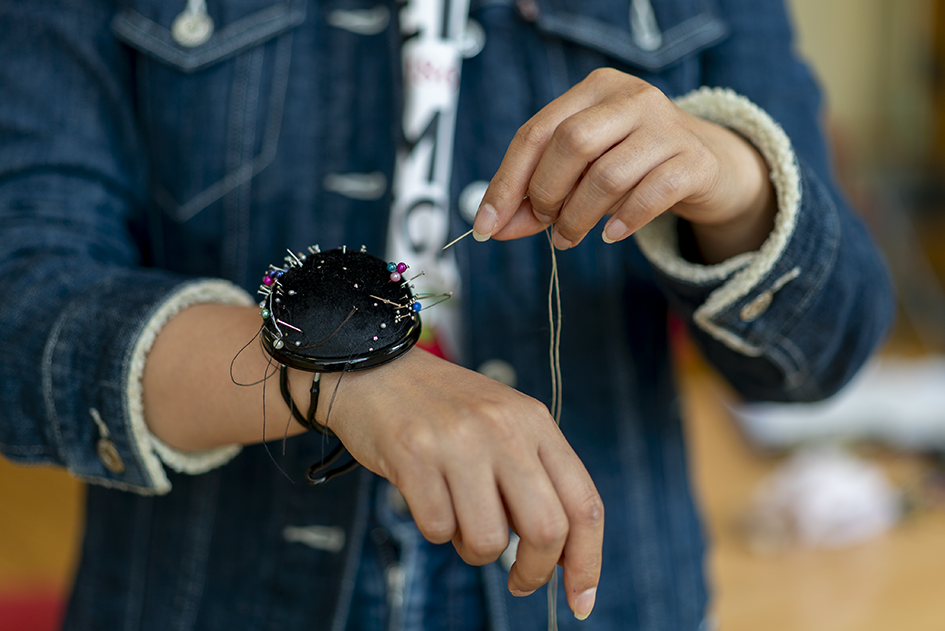
Photo credit: Chuck Blue Lowry
As they say on their website: Every time you mend a garment, you’re doing more than fixing a piece of fabric. You’re reducing waste, conserving resources and reclaiming the value of slow, thoughtful fashion.
Sewing machines are more than tools—they are instruments of creativity, sustainability and resilience. In a world where fast fashion dominates and textile waste clogs landfills, the ability to repair, upcycle and create your own clothing is a quiet but powerful act of defiance. A sewing machine doesn’t just mend fabric; it mends our relationship with the clothes we wear and the planet we share.
The UK throws away 300,000 tonnes of clothing (TRAID) to landfill or incineration annually. This equates to 4.7 kg of clothing waste per person in household residual waste (TRAID). The fashion industry’s reliance on fast, disposable clothing has made repair and reuse feel like a lost art. But sewing offers a solution—not just for our wallets, but for the environment.
When you learn to sew, you’re not just fixing a hem or replacing a button; you’re extending the life of an item and reducing the demand for new resources. By repairing what we already own, we conserve water, energy and raw materials, while also cutting down on the pollution and carbon emissions that come with manufacturing new clothes.
Sewing is also a form of self-sufficiency. In an unpredictable world, knowing how to mend a tear or alter a hem means you’re less reliant on stores and less vulnerable to supply chain disruptions. It’s a skill that empowers individuals, especially in communities where access to affordable clothing is limited. Schools, community centres, and even prisons have found that sewing programs reduce waste, teach valuable skills, and foster creativity.
As we come to the end of this year’s Mend It May, we wanted to share with you all the ways that we focus on mending here at SMH all year round.
Ayoka, our charity boutique
Our charity shop, Ayoka, is the focus of our sustainability initiatives here at SMH. The donations of clothing and household items that people give to us enable others to give them a new life and buy things for themselves that they may not be able to afford otherwise.
Lots of people send us pristine things, but occasionally we get some items that need a couple of stiches or a replacement button. Ayoka staff and volunteers and participants in our regular weekday crafting and beading sessions take on this mending for us to make sure that everything we sell in Ayoka is as good as new.
We’ve taken the celebration of second hand fashion and upcycled clothing to the next level over the last year too, holding our first Second Hand Fashion Shows in September 2025 and February 2026. This is going to become a regular part of our programme and we have been pleased to exhibit beautiful upcycled fashion items from local designers as part of both catwalks. Join us this September on the last Saturday of the month for our next Second Hand Fashion Show (timed to coincide with London Fashion Week).
Fast Fashion Therapy
Once a month, the team at Fast Fashion Therapy deliver a practical workshop in The Create Place to help participants save their old or damaged clothes and textiles from going to waste. The workshops encourage repair, upcycling and remodelling of used clothes. They also enable people to practice new sewing techniques on the materials provided before embarking on their mending. Sessions are suitable for beginners who need some help, or more experienced sewers looking for a dedicated space and time to sew.
Our Repair Cafe
Since September 2023 we have been running Repair Cafes here at SMH and at other venues in Tower Hamlets. The idea is simple: bring your clothes, bags and accessories or household electrical items and tech and our volunteers will do their best to fix them for you or show you how to sew the clothing items yourself.
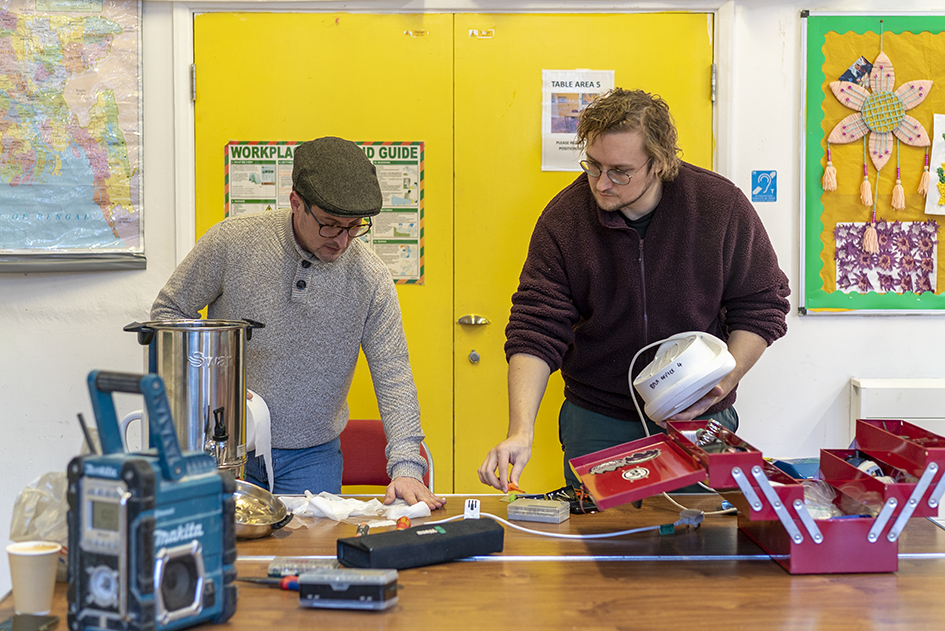
Photo credit: Chuck Blue Lowry
Many of us have a pile in the corner of a room at home that’s waiting to be repaired. Sometimes, we’re a bit scared to try to mend it ourselves as we’re worried about making it worse in the process (or we really have no idea how to sew or don’t have a sewing machine at home) – and obviously no one wants to try fixing electrical items when we don’t know what we’re doing.
People bring items to our Repair Café and sometimes we can’t fix them and instead we give people permission to get rid of the item from the pile in their home, and we tell them how they can recycycle it safely at local facilities. Then we have the amazing stories of our volunteers fixing something that means something special to the owner and there’s so much joy and sense of achievement.
Celebrating repair as an act of resistance
Breaks & Joins partnered with St Margaret’s House in 2025 to create Many Hands: Make Mending Matter, an audio-visual exhibition capturing the people and stories behind the act of repair.
Over two Saturdays in January and April 2025, Sue Mayo and Chuck Blue Lowry documented the energy, care and collaboration in the wonderful Repair Cafes at SMH. They reflected on how volunteers generously share their time and skills, fixing everything from toasters to trousers. They noted how visitors come not just to have their belongings repaired, but to connect, to learn and sometimes to hear that something couldn’t be mended after all.
These exchanges were captured in audio recordings, photographs and original artworks.
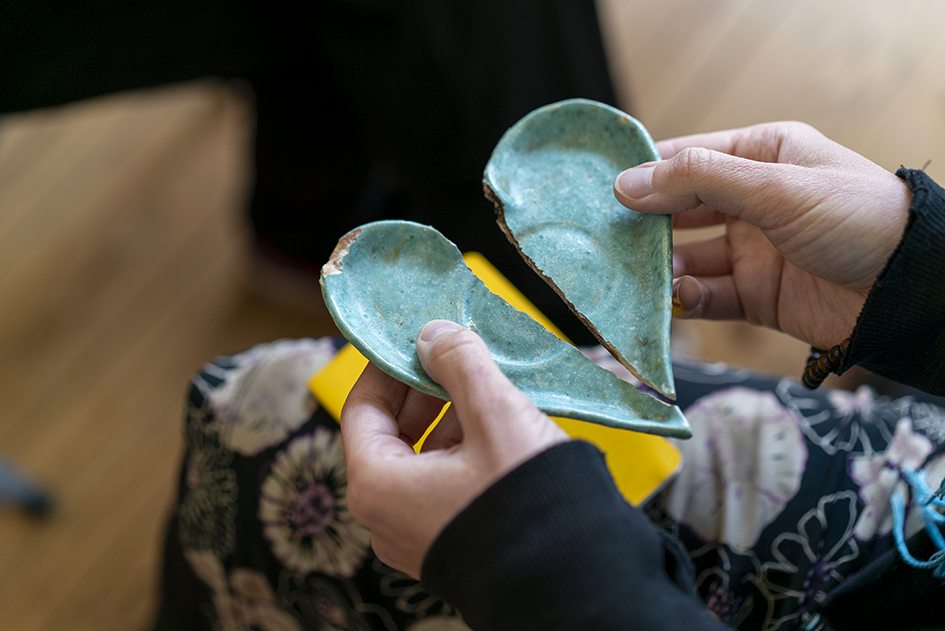
Photo credit: Chuck Blue Lowry
Some of those photographs are now in The Create Place, SMH’s workshop space, as a permanent exhibition of the hands that sew, a big part of what has been happening at SMH since the 1890s.
This exhibition was part of Second Hand September, and highlights repair as a powerful alternative to the wastefulness of throwaway culture. It reminds us that fixing things is not just practical, it’s political.
Many Hands celebrates not just the items that were fixed, but the conversations, shared knowledge and moments of connection that make mending matter. Together, we use our hands to mend our things and build our community.
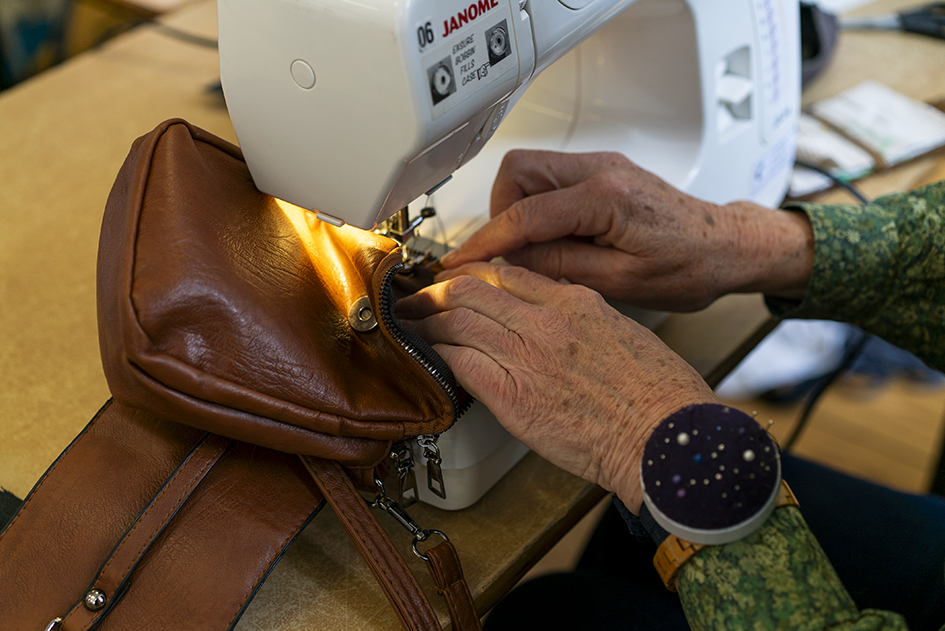
Photo credit: Chuck Blue Lowry
Keep an eye out for our next exhibition together which will be in The Gallery Cafe in September focusing on the repair of our things, ourselves and our communities.
You can listen to the audio piece created for the exhibition on our website here. But some beautiful quotes from that are below, reflecting everything we believe is intrinsic to Mend It May (and the importance of mending all year round).
What you told us repair means to you
This (Repair Cafe) is an incentive to come and do your repairs. What you miss at home is someone who can give you a hand.
With mending, it’s about getting over the initial fear!
The spaces just aren’t there for these kinds of gatherings. We need them everywhere.
They need to be in the community, the visibility, the helping each other, the holding each other to account – feeling responsible for showing up.
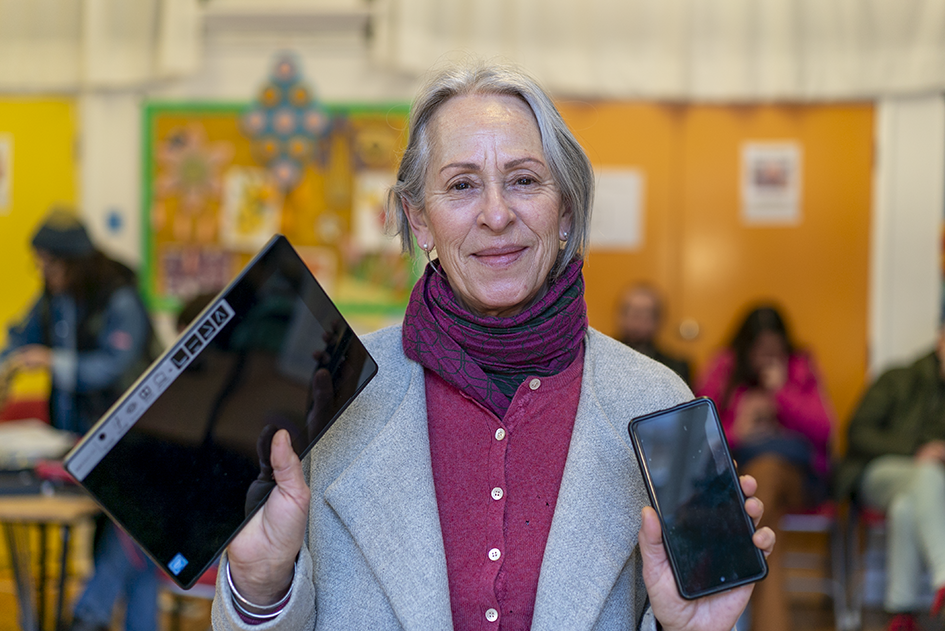
Photo credit: Chuck Blue Lowry
Building together, repairing together, coming together for a purpose that’s not to consume.
These lights are so dear to me; they hold so much memory. They’re only from Ikea but I love them. I bought them for my first home, and they were one of the first things I put in.
This is my little way of resisting. I know it’s not the main thing, it’s the big corporations that need to change their ways, but it gives me a closer connection with the things I bring into my home.
This is my contribution to the planet.
I don’t want to be part of things going to landfill in another country. It’s my waste, my mess. Why do we dump there?
I volunteer because I love mending things. As a child I loved fiddling with things. My grandmother would do big projects, like covering furniture, and we would all be roped in to help. Mending things and making things.
When I worked with small children, I found that they loved sewing. It engendered great conversations. There is a great peace that comes over you when you sew together.
Me and some old friends have a group called Mackin’ and takkin’ and we get together to do our sewing and mending, and we love it!
Sometimes it’s not broken. I like them ones.
It’s a great sense of achievement when someone comes who doesn’t want to chuck things out, it’s really nice when you can mend it. There are so many appliances out there that need electricity, and the price of repairing outweighs the price of replacing.
I use this tool (brought in for repair) for DIY, for myself and for neighbours. I enjoy it, I find it therapeutic. I’ve always enjoyed making stuff rather than buying stuff. The kick-off would have been secondary school, doing woodwork and metalwork. And my grandfather was a plumber and had loads of tools, wrenches, and spanners and so on. You need a directory of local people who can mend different things. With technology it’s become so much more complicated you don’t get so many repairers. It’s a bit alienating. Shout out for analogue!
I’ve brought in my Auntie’s jacket- its 40 years old. I wear it to remember her and try to keep it going as long as possible. It’s going on the shoulder where it takes the most strain, so we’ve mended it. Things were made really well back then. At school I got stopped from using the sewing machine because I made so many mistakes.
It’s been lovely mending this jacket and chatting with the lady, finding out it was her Auntie’s. She came with one hole, and I checked it over and found other bits, so I’m sending her home not needing any more repairs. After all those years some of the thread has disintegrated, it’s inevitable.
I brought a bag that was with me for years and years. I have fixed parts of it by hand, and I wanted to finish it with a machine. Now it’s strong enough to actually put stuff in it! I’m a bit afraid of the sewing machine, I worry that my hands will get caught – a childhood fear. What I like is when the volunteer starts it for you and then you learn the skill and can carry it on yourself.
I learned to sew when I was little. I had Community Centre classes. That’s why we need more Community Centres!